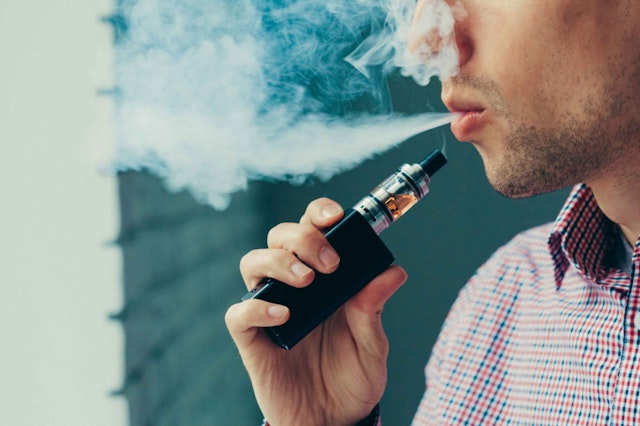
Managing smoking and vaping in the workplace can be a sensitive issue for employers. While some staff may smoke or use e-cigarettes, others may be concerned about exposure to second-hand smoke or vapour, as well as fairness around breaks.
On top of this, businesses must comply with strict legal requirements around smoking—and make clear decisions about vaping, which is not covered by the same laws.
Getting this right isn’t just about compliance. It’s about protecting employee health, maintaining productivity, and avoiding workplace disputes.
Our guide explores how smoking and vaping can be managed in the workplace.
What does the law say about smoking and vaping at work?
In the UK, smoking is prohibited in virtually all enclosed workplaces and work vehicles under smoke-free legislation introduced in 2007.
This means:
- Smoking is not allowed in enclosed or substantially enclosed workplaces
- Smoking is banned in shared work vehicles
- Employers must display ‘No Smoking’ signs and prevent smoking indoors
Failure to comply can lead to fines for both individuals and businesses.
However, vaping (using e-cigarettes) is not included in this legislation, meaning employers can decide whether it is permitted on their premises.
Why you need a smoking and vaping policy
Even though smoking is already restricted by law, employers should implement a clear policy covering both smoking and vaping.
A policy helps you:
- Ensure legal compliance
- Set consistent expectations for staff
- Manage smoking and vaping breaks effectively
- Prevent conflict between smokers, vapers, and non-users
- Protect employees from second-hand smoke exposure
The Health and Safety Exectutive (HSE) recommends that employers have a specific smoking policy and prioritise the needs of non-smokers who do not wish to be exposed to tobacco smoke. Extending this approach to vaping ensures clarity and consistency across your workforce.
Key steps to manage smoking and vaping in the workplace
Set clear rules and designated areas
Clearly outline where smoking and vaping are permitted. In most workplaces:
- Smoking is restricted to designated outdoor areas
- Vaping is either treated the same as smoking or restricted separately
Providing designated areas can help manage behaviour and reduce disruption, while keeping entrances and shared spaces clear.
Apply fair rules around breaks
Smoking and vaping can lead to disputes if some employees take more frequent breaks than others. While staff are entitled to statutory rest breaks, employers do not have to provide additional breaks for smoking or vaping. Applying a consistent approach to all employees helps maintain fairness and avoids .
Decide your stance on vaping indoors
Because vaping is not covered by smoke-free laws, employers must decide whether it is allowed indoors.
Many organisations choose to:
- Prohibit vaping in indoor workspaces
- Restrict vaping to the same areas as smoking
- Ban both smoking and vaping entirely on site
The key is to ensure your approach is clearly defined and consistently enforced.
Consult with your employees
Consulting staff when introducing or updating your smoking and vaping policy can help ensure it is practical and effective. It also encourages engagement and reduces the likelihood of disputes or non-compliance.
Protect staff from exposure
As per the , employers have a duty to protect employees’ health, including from exposure to second-hand smoke.
This may require risk assessments in certain situations, such as:
- Staff working in customers’ or service users’ homes
- Outdoor workplaces where smoking occurs frequently
Taking a proactive approach helps reduce health risks and demonstrates compliance with your duty of care.
Managing workplace issues related to smoking and vaping
Issues can arise when smoking or vaping affects performance, behaviour, or other employees.
Common challenges include:
- Excessive smoking or vaping breaks
- Failure to follow workplace rules
- Complaints from colleagues
- Disruption near entrances or shared areas
Employers should address these issues consistently and in line with . Where necessary, disciplinary procedures may be appropriate.
At the same time, some employers choose to support employees who want to stop smoking by promoting initiatives or signposting stop smoking services.
Need help managing smoking and vaping in your workplace?
Balancing legal compliance with employee wellbeing isn’t always straightforward—especially when managing both smoking and vaping in the workplace.
Peninsula supports employers with:
- Drafting legally compliant smoking and vaping policies
- Managing employee conduct and workplace disputes
- Carrying out to protect staff health
- Providing 24/7 HR and Health & Safety expert advice
- Delivering documentation, training, and ongoing compliance support
With Peninsula’s expert support, you can confidently manage smoking and vaping in your workplace while creating a safe, fair, and compliant environment for your employees.