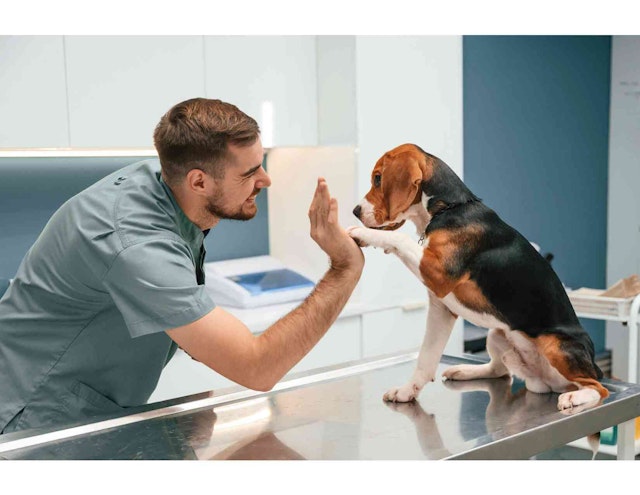
Like any workplace, veterinary practices require risk assessments that assess the risk of harm that could occur from the work. Through this process, operators of veterinary practices can have a full understanding of what's likely to cause injury to staff, visitors or animals, and ultimately, what protections need to put in place.
Health & Safety legislation requires every business to provide a safe system of work for employees. The way that this would be done in a veterinary practice is to perform risk assessments.
What legislation do vets have to follow?
Vets, like any business, must comply with the and the Management of Health and Safety at Work Regulations (1999).
They'll also have to follow The Veterinary Surgeons Act (1966): This legislation specifies that only qualified surgeons registered with the Royal College of Veterinary Surgeons (RCVS) can practice veterinary medicine and surgery.
What are the risks of working with animals?
Physical injury
It's probably not surprising that working with animals can increase the risk of physical injury occurring. Whilst they might be well-trained, their behaviour can still be unexpected.
For example, if an animal has a fear of other animals, or unfamiliar people, it might become aggressive and has the potential to cause .
Infection
Like us, animals carry germs - and human exposure to such bacteria can be harmful.
For example, if an animal has ringworm and is left untreated, they could scratch a human and cause them to develop ringworm too.
Musculoskeletal issues
Lifting and carrying animals can increase the risk of musculoskeletal issues, especially if your employees lift and carry incorrectly. These are injuries or disorders that affect the muscles, tendons and joints.
What are the different types of risk assessments used in a veterinary practice?
There are a range of risk assessments you could use to ensure all hazards and risks are considered. All have different objectives, so ensure you're aware of each one so you know which one to use.
These include:
Control of Substances Hazardous to Health (COSHH) risk assessments
COSHH risk assessments are used to control the hazards to health associated with work that involves hazardous substances. This can include substances used for cleaning, sterilisation and medicines.
Where hazardous substances are concerned, there's a genuine risk to workers' health. With our , your staff are safeguarded.
Task specific risk assessments
Task specific risk assessments cover the task and the hazards associated with them. This could be for visiting patients in their home, for example.
Fire risk assessment
A fire risk assessment will be required for the business premises that aims to protect life from fire. It's imperative that businesses adhere to .
Legionella risk assessment
A looks at your water system and determines areas where water could stagnate and lead to the accumulation of legionella bacteria.
Personal risk assessments
Personal risk assessments are personal. This means they are specific to an individual employee. They are used for employees that are new, or , children or young people (like work experience, student placements, or apprentices), and any person that uses as part of their daily work.
What happens if you don't do something about a hazard in your veterinary practice?
Failure to take action to control hazards in your workplace is a direct breach of workplace Health & Safety legislation. It can lead to serious consequences. If an employee is injured due to a lack of , this can lead to compensation claims, as well as the Health and Safety Executive investigating your workplace.
Consequently, you might face legal, financial and even reputational damage. If employees do not feel safe at work, they may wish to work elsewhere, leading to a higher staff turnover.
What is covered in a veterinary risk assessment?
A veterinary risk assessment involves five main steps. You must perform each one thoroughly, to ensure you don't miss a hazard or fail to protect staff adequately.
The steps are:
Identify hazards
The first step in any is to identify the hazards in your practice. A hazard is anything that can potentially cause harm to anyone. Hazards could include range manual handling, sharps, stress, and violence & aggression.
Assess the risk of harm
Once the hazards have been identified, ensure you assess the risk of them causing harm. To assess the risk, you will need to weigh up the likelihood of the hazard occurring and the potential consequences.
Implement control measures
Now you've assessed the risk of harm occurring in relation to identified hazards, you must implement control measures to reduce the risk of harm. It is important to use the hierarchy of controls to determine what controls are going to be most effective. See our How to Complete a Risk Assessment article for more information on this.
Record findings
Next, you must record the findings of your risk assessment. It is important to properly document your risk assessments so you can easily communicate the findings with your employees. Part of this process should include having employees sign to indicate they have read and understood the content.
Review when necessary: Once you complete your risk assessment, you'll need to ensure you review it when required. As a minimum, risk assessments should be reviewed annually.
The important thing to remember with risk assessments is that you should review them each time something changes in your workplace. For example, if you change a work process, or introduce new equipment - you must assess the risk these changes create.
How can Peninsula help with veterinary risk assessments?
It's your job to support animals, and it's our job to support you.
Our qualified will come to your practice and assess the hazards present. Afterwards, they'll give you results of your risk assessment, and offer guidance on how you can keep your business safe.
Plus, when you work with Peninsula, our employment law experts will produce all the you need to maintain your legal compliance. Alternatively, if a problem arises unexpectedly - , 365 days a year.
So, whether you need help assessing the risk of harm within your practice, creating and implementing workplace safety procedures, or simply need advice on your recruitment process - we can support you whatever the circumstances.