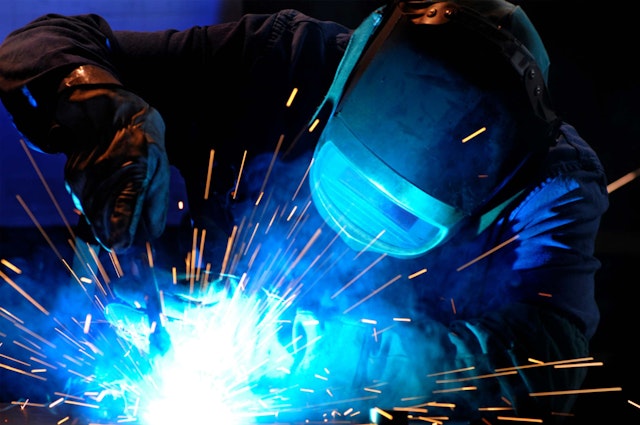
Many types of work include welding activities. From occasional welding completed by car mechanics to more frequent welding in steel manufacturing, welding is a necessary means of repair and production of many items that we all use in everyday life.
As an employer, if your employees complete any type of welding activity, you must consider the dangers associated with the work, and ensure the activity is suitably risk assessed. It is vital that risks are minimised to both people carrying out welding work, and others that may be in the vicinity.
As an employer, if your employees complete any type of welding activity, you must consider the dangers associated with the work, and ensure the activity is suitably risk assessed. It is vital that risks are minimised to both people carrying out welding work, and others that may be in the vicinity.
In this guide, we'll discuss safety hazards, risk management, and adequate control measures for welding. We have years of experience in supporting businesses in the with their outsourced .
What is welding?
Welding is the process of joining metal. It involves using a high heat to melt materials together and then allowing them to cool. Typically, companies that weld do so to create metal structures such as furniture and vehicles.
While welding activities are necessary for many businesses, it can be severely hazardous. Which is why you must plan and manage the process effectively.
Conducting a welding risk assessment
If your employees complete work involving welding, then you must perform welding risk assessments. To complete a risk assessment, especially one for a high hazard activity like welding, it is of major importance that the person tasked with completing it is competent to do so.
In order to be competent, the person will need to have experience with the process and have a decent amount of knowledge of Health & Safety hazards.
In order to be competent, the person will need to have experience with the process and have a decent amount of knowledge of Health & Safety hazards.
A risk assessment will document the process of identification of welding related hazards, and steps taken to mitigate the risk. When conducting the risk assessment, you will need to consider:
- The volume of welding work and the level of welding fume produced.
- The size of the work space.
- What type of metal that is being welded - for example, stainless steel.
- What type of flux and filler metals welders are using together - for example, flux-cored wires.
Once you consider the above, you also need to look at welding safety hazards. This is so you can work out the likelihood of risks affecting your workers.
What hazards are associated with welding?
What hazards are associated with welding work?
1. Exposure to welding fume and gases
Welding can expose workers to invisible gases such as nitrogen oxides, chromium and nickel oxides. As well as carbon monoxide - which can easily enter the lungs. Moreover, it exposes workers to welding fume.
Welding fume is a byproduct of heating metals above their melting point. These metals then convert to vapour and turn into welding gases - or welding fume - which lingers in the air. Exposure can cause ill health effects, such as:
- Pneumonia: Exposure to welding fume increases the risk of serious lung infection, including pneumococcal pneumonia. Welders are more susceptible to infection as a result of fume exposure, which can lead to severe illness and hospitalisation.
- Occupational asthma: Stainless steel and high nickel alloy welding can produce chromium and nickel oxides. Exposure to these gases can cause asthma.
- Cancer: Welding fume is carcinogenic - which means it has the potential to cause cancer.
- Metal fume fever: Welding can often result in flu-like symptoms, which are typically worse at the beginning of the working week. Welders refer to this as metal fume fever.
- Throat and lung irritation: Whilst throat and lung irritation is a more mild side effect, it can still impact your workers. This type of irritation may include throat dryness, a tickly throat, or coughing and tight chests.
- Arc-eye: Welding exposes workers to ultraviolet radiation, which causes inflammation of the cornea. This can lead to the welder developing red or watery eyes which can become painful and sensitive to light.
2. Electric shocks
Welders are also at risk of getting an electric shock from welding activities. Electric shock is a hazard during welding because welding deliberately uses electricity to create heat, and the welder, the equipment, and the workpiece can all become part of an electrical circuit if control measures fail.
3. Fire and explosions
Welding is a form of “hot work” – it generates intense heat, sparks and molten metal, all of which can act as powerful sources of ignition. If you do not manage the risk, it could result in severe burns and destruction of property.
What measures need to be in place for welding?
When considering controls, it is important to balance the benefits of risk reduction, against the time, cost and effort to implement the measure. For welding activities, it is vital that any measures in place to protect workers are effective. Controls need to control physical hazards such as burns and electrocution and long-term health hazards such as exposure to welding fumes.
To suitably control risks, the best approach is the hierarchy of risk control. This is something you can use with any risk assessment, but we’ve prepared a summary of the hierarchy, with some welding specific examples.
1. Elimination: Remove the hazard entirely (most effective)
Where reasonably practicable, the safest option is to avoid welding altogether. Measures include:
- Designing components so they can be assembled using bolts, rivets or adhesives instead of welding
- Prefabricating welded components off‑site in a controlled environment
- Eliminating unnecessary repair welding by replacing damaged components
Elimination is the most effective measure because no exposure can occur once the hazard is removed.
2. Substitution: Reduce the hazard, or substitute it for a less hazardous solution
If elimination is not possible, the next step is to reduce the level of risk by changing the process or materials used. Measures include:
- Using welding processes that generate less fume
- Selecting consumables that produce lower levels of hazardous fume
- Switching from high‑fume processes to mechanised or automated welding where feasible
Substitution helps reduce both health risks from fumes and physical risks linked to manual welding.
3. Engineering controls: Isolate people from the hazard
Engineering controls physically reduce exposure and do not rely on worker behaviour.
Measures include:
- Local Exhaust Ventilation (LEV) to capture welding fume at source
- On‑torch extraction systems for MIG welding
- Welding screens or curtains to protect others from arc radiation and sparks
- Properly designed electrical systems with effective earthing and isolation
- Fire‑resistant work surfaces and barriers
The Health and Safety Executive (HSE) identifies LEV as the most effective method for controlling exposure to welding fume where welding cannot be eliminated.
The next two rungs on the hierarchy are less effective than those we have just discussed. Predominantly because they rely on the behaviour of people. They are still very important measures to implement, the difference is enforcing the safe behaviours of people.
4. Administrative controlshange the way work is done
Administrative controls reduce risk through procedures, training and supervision, but rely on consistent compliance. Measures include:
- Safe systems of work and method statements
- Hot work permit systems
- Planned maintenance and inspection of welding equipment
- Limiting welding duration or exposure time
- Training workers in welding hazards, fume control and emergency procedures
- Fire watch arrangements during and after welding
5. Personal Protective Equipment (PPE) – last line of defence (least effective)
Welding‑specific examples:
- Welding helmets with suitable filter lenses
- Flame‑resistant gloves and clothing
- Respiratory protective equipment (where exposure cannot be adequately controlled)
- Safety boots and eye protection
PPE does not eliminate the hazard and must not be relied upon alone, particularly for exposure to welding fume.
Health surveillance
A health surveillance programme provides an early warning if things aren’t working as they should. It helps spot early signs of work‑related ill health and highlights where existing control measures may not be adequately protecting workers, allowing action to be taken before serious harm occurs. Any concerns identified should trigger a review of how the work is being carried out and how risks are being controlled.
If your employees are welding on a regular basis you must offer health surveillance. is a scheme of repeated health checks that can identify ill health.
The Health & Safety Executive (HSE) asks that you offer health surveillance when there are health hazards - even after you put measures in place. You must also hire an occupational health professional to conduct health surveillance on your behalf
Get expert advice from Peninsula UK
Conducting a risk assessment helps you examine the welding processes in your workplace. As well as ensuring that you and your welders have controlled the residual risk.
You must conduct regular risk assessments into your business's welding activities. As well as ensuring your employees carry out their work safely, and without any risks to their health. Otherwise, you could face Health & Safety claims, legal costs, and even reputational damage.
Our teams provide which is available 365 days a year. We take care of everything when you work with our Health & Safety experts.
Ask a question on Brainbox
Get instant, expert answers to all your HR and health & safety questions