Introduction
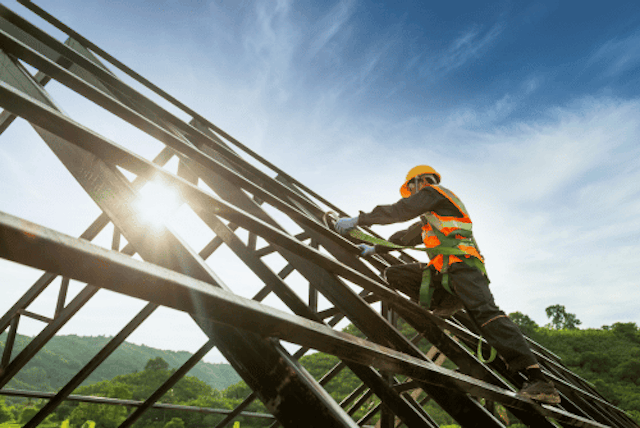
Work at height has been, and continues to be, the leading cause of major injuries and fatalities in the UK. Working at height applies to any work activity that takes the worker above ground level or places them next to a drop such as a by stairs, by open water, or by an excavation. Basically, any situation where a worker could fall a greater distance than floor level is work at height. Work at height activities range from industry to industry, and no industry is exempt.
Case Study: Six floor fall causes death of teenage labourer
A construction company has been fined after a teenage worker fell six floors from the top of a ventilation shaft. In July 2023, the 19-year-old worker had been tasked with helping to dismantle scaffolding when they stepped on the ventilation shaft and the covering gave way. The worker fell six floors and suffered fatal injuries. A HSE investigation found that the covering for the ventilation shaft was a sheet of plasterboard and roofing foam. Inspections undertaken routinely of the building did not include the roof area which meant that the unsuitable covering had gone undetected prior to the accident, and information of a fragile roof surface was not given to the scaffolding team.
This case, like other work at height fatalities associated with working on fragile roof surfaces are far too common and entirely preventable. Employers must learn from these cases and take the necessary steps required to protect workers that work at height.
Proactive inspections of work environments and communication of essential safety information and display of signage could have prevented this incident from happening. It is of major importance that employers properly plan, and risk assess work at height activities, and share/ gain essential safety information from other organisations involved to ensure safety.
Common work at height hazards
1. Falls from height – Falls can occur from ladders, scaffolding, roof edges, or into openings like excavations. These incidents often lead to severe injuries such as fractures, spinal cord damage, or death.
2. Falling objects - Objects such as tools, materials, or debris can fall from height, posing a severe risk to anyone working or walking below.
3. Fragile roofs or work surfaces - Working on or near fragile surfaces—such as asbestos cement sheets, skylights, or rotted chipboard—is extremely high-risk. The worker could be exposed to harmful asbestos fibres. Or like with the case study, the surface may collapse under a worker's weight.
4. Insufficient or use of incorrect access equipment – Using the wrong tool for the job can greatly increase the risk of accidents. Misuse of ladders (overreaching or overloading), unstable scaffolding, or faulty mobile elevated work platforms (MEWPs) can all lead to falls from height.
5. Inclement weather - Rain and ice can make surfaces slippery, causing loss of balance. High Winds can also cause workers to lose their footing or blow materials off platforms.
6. Fall-arrest systems - While designed as a safety measure, fall-arrest systems such as harnesses and lanyards can introduce secondary hazards if used incorrectly. The worker may strike the ground before the system fully deploys. They can also cause fatal harm if
a worker is left hanging in a harness after a fall, blood pooling in the legs can lead to unconsciousness or death within minutes.
Legal duties
Employers must abide by the following legislation:
Health and Safety at Work etc. Act: This primary piece of health and safety legislation stipulates the employer’s responsibilities for the safety and health of their employees, as well as any other person that could be affected by their work activities.
Work at Height Regulations: The main law requiring work to be properly planned, supervised, and carried out by competent persons. It mandates a hierarchy of control for planning work at height activities.
Lifting Operations and Lifting Equipment Regulations: Pertains to any work where lifting equipment is used and specifies measures for the operation and safety of lifting equipment.
Management of Health and Safety at Work Regulations: Mandates the requirement for employers to complete suitable and sufficient risk assessments for the activities that their employees complete.
Provision and Use of Work Equipment Regulations: Sets specific regulatory requirements for employers to provide work equipment that is fit for the intended use, is safe, and is used safely by competent operators.
Control Measures
The work at height regulations mandates the use of a hierarchy of control for planning work at height activities. What this means is that employers must consider control measures in a specific order to comply:
1. Elimination – The first thing to be considered is whether there is a need to work from height at all. The work should be evaluated to determine whether it can be done at ground level. For example, water fed poles used to complete window cleaning tasks from ground level.
2. Collective Prevention – Consider what robust measures can be implemented to protect every person in the area automatically without them having to do anything. This kind of measure could include guard rails, scaffolding or MEWPs.
3. Personal Prevention - Next consider protection for individual workers. Measures should be considered that prevent the worker from reaching the hazard. Work restraint systems like lanyards attached to a harness prevent the worker reaching an edge or a fragile surface.
4. Collective Mitigation – Where a fall cannot be prevented, measures to shorten the distance and reduce the consequence of a fall can be implemented. An example of this could be the use of safety nets or soft-landing airbags or mats.
5. Personal Mitigation – This is the last resort option and must not be the only measure taken to protect your employees. Harnesses with shock-absorbing lanyards or retractable lifelines can be used but they require a high level of training and a documented rescue plan.
6. Administrative Controls – These are measures that should be implemented to support the effectiveness of controls used, such as training, signage, inspections, and exclusion zones.
Summary
Employers must ensure that risk assessments for working at height activities are specific to the task and work environment to be effective, as the potential outcomes of a work at height accident could be fatal. Persons in control of work at height operations need to take a structured approach to risk assessment, considering measures based on the hierarchy of control to properly protect their workers. It is vital that employees tasked with working at height are competent, and information has been provided on how to complete the work safely. Proper planning for work at height can be lifesaving and must be taken seriously for any task.