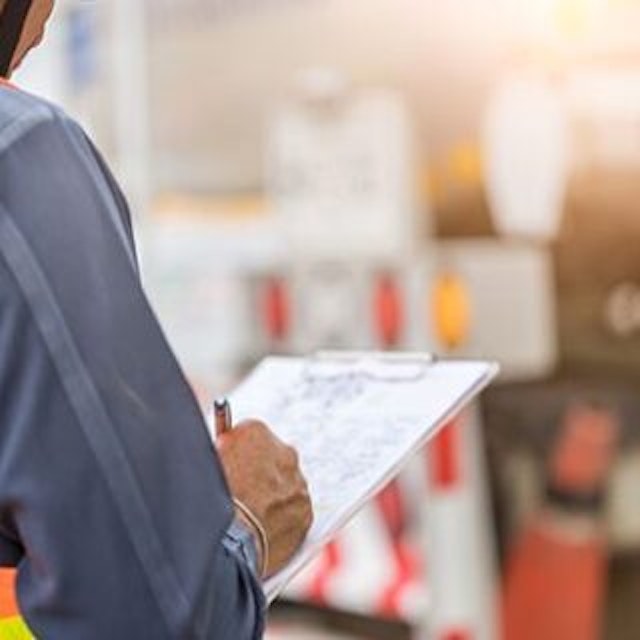
As an employer, you have a legal duty to ensure the health, safety, and welfare of all your employees. One way to do this is to carry out a Health & Safety audit.
This analysis can provide you with valuable insights and identify improvements, keeping your employees and other visitors on-site safe from injury at all times. Failure to do so may lead to serious injury and legal damage.
What is Health & Safety audit?
A Health & Safety audit is a proactive assessment of the Health & Safety performance of the organisation, as well as ensuring its legal compliance. Put simply, it is an evaluation and assessment of an organisation's Health & Safety:
- Standards
- Policies
- Systems
- Safety procedures
These audits must be conducted by somebody that is competent. They gather evidence using the following methods:
- Interviews
- Observations
- Document reviews
Following this, the auditor will produce a report identifying areas in which the organisation can improve its .
What areas does a Health & Safety audit cover?
A Health & Safety audit will cover a range of areas related to your Health & Safety management, including:
- Health & Safety policies and procedures
- Accident and incident reporting
- Staff Health & Safety training
- Corrective actions
- Fire and emergency procedures
Different types of Health & Safety audits
There are two main types of Health & Safety audits that your company can perform, or have performed for you. A schedule of both types of audits are essential for any organisation.
An internal audit is carried out by somebody employed by the organisation; there should be a set frequency based on what the focus of the audit is. For example:
- Weekly for checks pertaining to the safety of the work environment
- Monthly for accident and incident record statistics
- 6 monthly for fire and emergency procedures
- Annually for risk assessments and policy documents
Regular internal audits ensure that you have greater control over Health & Safety, meaning that remedial actions can be implemented before and incidents have the chance to happen.
Annual Health & Safety audits carried out by an external auditor are also important to get impartial competent health and safety advice on the organisation’s Health & Safety performance.
Certain external auditors can audit your performance against ISO standards. If you meet the standard and it is awarded, holding ISO certification can be very favourable to potential clients.
The auditor will visit your site and request to see copies of:
- Training records
- Evidence of communication with employees
- Risk assessments and other documented safe systems of work
- Health & Safety policy and arrangements.
Is carrying out a Health & Safety audit a legal requirement?
There is no specific legal requirement for a Health & Safety audit to be carried out. However, employers do have a legal duty to protect the health, safety, and welfare of their employees and to protect them from “reasonably foreseeable” risks.
A schedule of Health & Safety audits is a highly effective tool to proactively review what risks are present that could reasonably happen and take action to prevent harm.
The Health and Safety Executive expect that large public and private sector organisations have formal procedures in place regarding the proactive management of health and safety.
What are the benefits of carrying out Health & Safety audits?
There are several benefits your company can experience from carrying out regular Health & Safety audits of your company. For example, an audit:
Improves your Health & Safety management
By pinpointing areas of improvement, audits help you establish what measures already in place are working, and what may need to be modified to be more effective before harm can be caused.
Ensures compliance with Health & Safety regulations
Carrying out audits can identify areas of non-compliance which ultimately, protects your company from fines and potential legal claims.
Reduces the risk of litigation
By addressing potential hazards, audits help to reduce the risk of litigation, such as compensation claims. This helps a business save time, money, and helps to enhance its reputation.
Improves employee morale
Commitment to proactive Health & Safety management by leaders can make workers feel safe at work, improving the safety culture serves to improve and keeps staff happy, healthy, and safe.
How often should Health & Safety audits be carried out?
No specific legislation states exactly how often a Health & Safety audit should be carried out. There is also no “one size fits all” approach to the frequency.
For example, a chemical company may determine that they must conduct audits more frequently due to the hazardous substances they use. However, a smaller office may determine that audits are required less frequently. It’s all about balancing risk with resource.
For example, a chemical company may determine that they must conduct audits more frequently due to the hazardous substances they use. However, a smaller office may determine that audits are required less frequently. It’s all about balancing risk with resource.
How to conduct an internal Health & Safety audit
There are several steps included in a Health & Safety audit. By following them, you create a thorough safety audit system. The steps include:
Stage 1: Documentation
The first stage of a Health & Safety audit is to review documentation already in place. This documentation can include:
Stage 2: Evidence gathering
The second step of the audit process is arguably the most important - evidence gathering. This part can involve:
- Interviewing employees: Interviews help reveal whether the communication methods used to give Health & Safety information are effective and get an idea of the Health & Safety culture of the organisation.
- Workplace reviews: Review all work processes and the general work environment to ensure that all safety protocols are being followed by operating staff, and that they continue to be effective.
- Accident record data: Take a look at historical data, are there any trends in the types of accidents being reported? Does a lack of data indicate that accidents are not being reported by employees?
Stage 3: Reviewing results
The third stage of the process is reviewing and recording the results of the audit. The auditor will issue a report focused on areas where action should be taken, with comments and recommendations.
Stage 4: Taking action
Now is the time to implement measures in response to the results of the audit. This could be introducing new equipment, refreshing employee training, or modifying risk assessments. Whatever you determine is the best course of action, make sure that people involved are informed of what is expected of them.
How Peninsula can help with your Health & Safety audit
With Peninsula's , a Health & Safety auditor will assess your workplace and uncover those critical hazards which put you and your staff at risk.
So, you don't need to plunge your own time, training, and money into carrying out your own audit. The UK's leading Health & Safety specialists will sort it for you.
After your audit, you’ll receive a detailed, user-friendly report that guides you through your next steps. Meaning you’ll know exactly how to protect your workforce and pass a Health & Safety inspection.
Plus, Peninsula can help with every aspect of your Health & Safety management. Including:
Check if your workplace meets essential safety standards
With SafeCheck, you can outsource your workplace Health & Safety audit to the UK's leading specialists - for only £395